Nothing changes until you see it differently.
Not more effort. Not a harder push. A different set of eyes on the same situation — and suddenly the thing that felt immovable has a door in it.
My work is asking the questions that open it…
The questions are the work.
Courageous, curious, sincere ones. The kind you can’t answer on autopilot — where the first response that arrives isn’t quite the true one, and the true one takes a moment to surface.
I’m not here to hand you a conclusion. I’m here to hold steady, open space while we work together to find yours, because the answers you arrive at yourself are the ones that hold.
Expanding your awareness and expanding your consciousness are the same motion. Everything else follows from there.

You might recognize yourself here.
- Something changed — a job, a move, a marriage ending — and you haven’t found your footing in the new version of it yet.
- There’s a specific situation you’re carrying anxiety about right now.
- You second-guess yourself in conversations that matter — and replay them afterward.
- A breakup or an older relationship left a mark you’re still working around.
- You give and give, and somewhere along the way stopped being able to say no.
Underneath a lot of this sits an old, quiet assumption about what we’re worth — usually picked up long ago, rarely examined since. Most of us are carrying some version of it.
Three common areas of work.
These come up more than anything else — but they’re a starting point, not a menu. Most people arrive knowing something’s off without knowing where it lives. Finding that is part of the work.
Agency
Who’s been holding the wheel?
We hand our choices away in small pieces — to keep the peace, to be agreeable, to avoid a hard moment. Then something arrives and we find we’ve been driving from the passenger seat. The work is taking it back deliberately, before you need it.
Communication
Is the message sent the message received?
Almost never, and that gap is where most conflict actually lives. We look at what you meant, what landed, and what to do differently — using tools like Nonviolent Communication to make the invisible part visible.
Empathy
Can you extend to yourself what you give everyone else?
There’s the empathy that understands someone and the empathy that feels with them — knowing which you’re using changes what’s possible. And most people I meet are fluent in it outward and beginners at it inward.
Six moves, in order.
The sequence stays consistent. The tools inside it are chosen for you.
Arrive
We check where your nervous system actually is before we touch anything else. Nothing useful happens in a body that’s still braced.
Open
You bring the thing. And if the thing is too hot to hold right now, we start somewhere softer and work toward it.
Get curious
I ask about what you were reaching for underneath the action. Not to catch you out — to find out what you actually wanted.
Find the gap
Between what you did and what you hoped it would get you. Seeing that gap clearly is usually the moment the courage to try something else shows up on its own.
New eyes
Same facts, wider view. We set aside right and wrong in favor of a more useful measure: does this serve me, or doesn’t it?
Practice
You leave with something to try — rehearsed while things are calm. Under stress we reach for what’s familiar, so the goal is to make the new thing familiar first.
No single approach reaches everyone.
One person needs a reframe. Another needs to work through the body. Another needs the thing said in the language of the beliefs they already hold. I meet you inside your framework rather than asking you to adopt mine.
What that draws on
Take the tools. They’re yours.
Everything below is free, and plenty of people get real distance with them alone. I’d rather you have them than not.
Anyone can own a hammer, a chisel, and a saw. Knowing which one, when, and for what — that’s the method.
Your chart, read three ways.
Human Design is a map of how your energy works — how it starts, how a decision settles, what you take in from the people around you. A reading is that map, drawn from your birth moment and written to your chart alone.
There are three ways in. A written summary of the named parts of your chart; the chart itself, drawn, as a page you keep and a document you can print; and the full reading, where every section names the feature of your chart it rests on. Nothing is held back from the smaller ones to make the larger ones look better.
Two pieces in the library explain every word of it, and both are free and always will be — worth reading first if the language is new.
See what each reading is →From engineering to this.
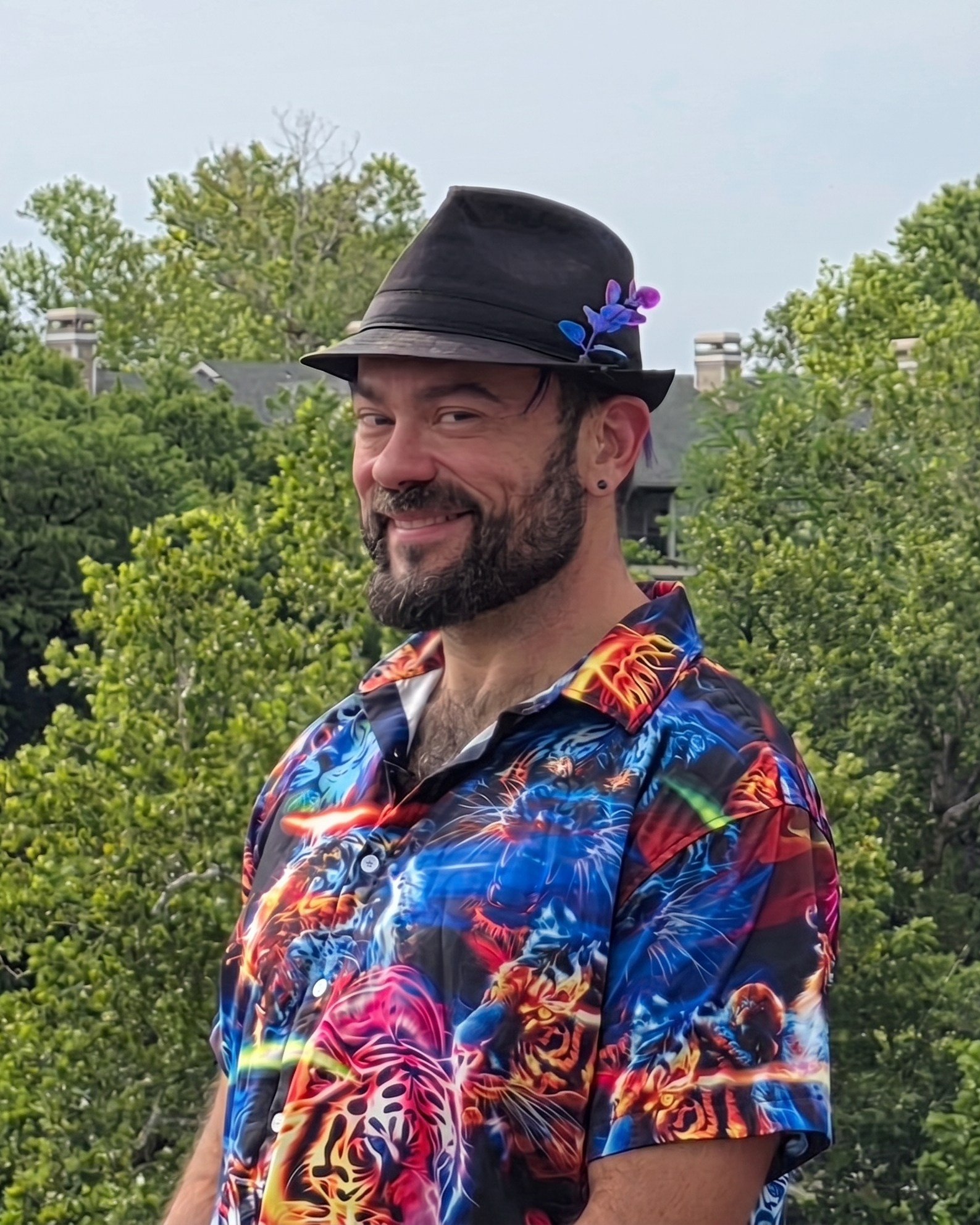
I came up in the structured, analytical world of engineering — systems, precision, problems taken apart until they made sense. Useful training. But over time I felt a pull toward working with people instead of parts.
So I studied: conflict resolution, communication, coaching. And I kept finding the same thing — the deepest changes didn’t come from new information. They came from someone seeing their own situation differently.
That became The Champagne Method: a practice rooted in empathy, intentionality, and the belief that every person holds the capacity for profound growth.
Then my path took a turn I didn’t plan. A heart attack stopped me cold, and the strain of it moved straight into my closest relationships. It could have been the hardest season of my life. It became the most honest one — an invitation to look inward and do the growth and healing I didn’t know I needed.
The tools I share aren’t theory. They’re what carried me through.
Champagne is my name. And the second fermentation — the one that actually makes the bubbles — happens sealed in the bottle, under pressure. That parallel wasn’t lost on me.
In their words.
“Thank you for holding space, and helping me see where I can make improvements. And thank you for helping me process, and see that I am not acting from a space of love or peace.”
Jessie Santos · Relationship Transition
“I came into this conversation feeling anxious and overwhelmed. After our 1-hour discussion, I feel confident, motivated and relieved. I'm ready to get started on my project!”
Charley S. · Confidence & Efficacy
“Thank you for reminding me to honor myself. I see now that I was giving too much of myself to the event space. Now I understand that setting healthy boundaries around how much I engage—without falling out of honor with myself—helps me maintain a healthy balance between what I give to myself and what I contribute outward.”
D. C. · Confidence & Efficacy
Start with a conversation.
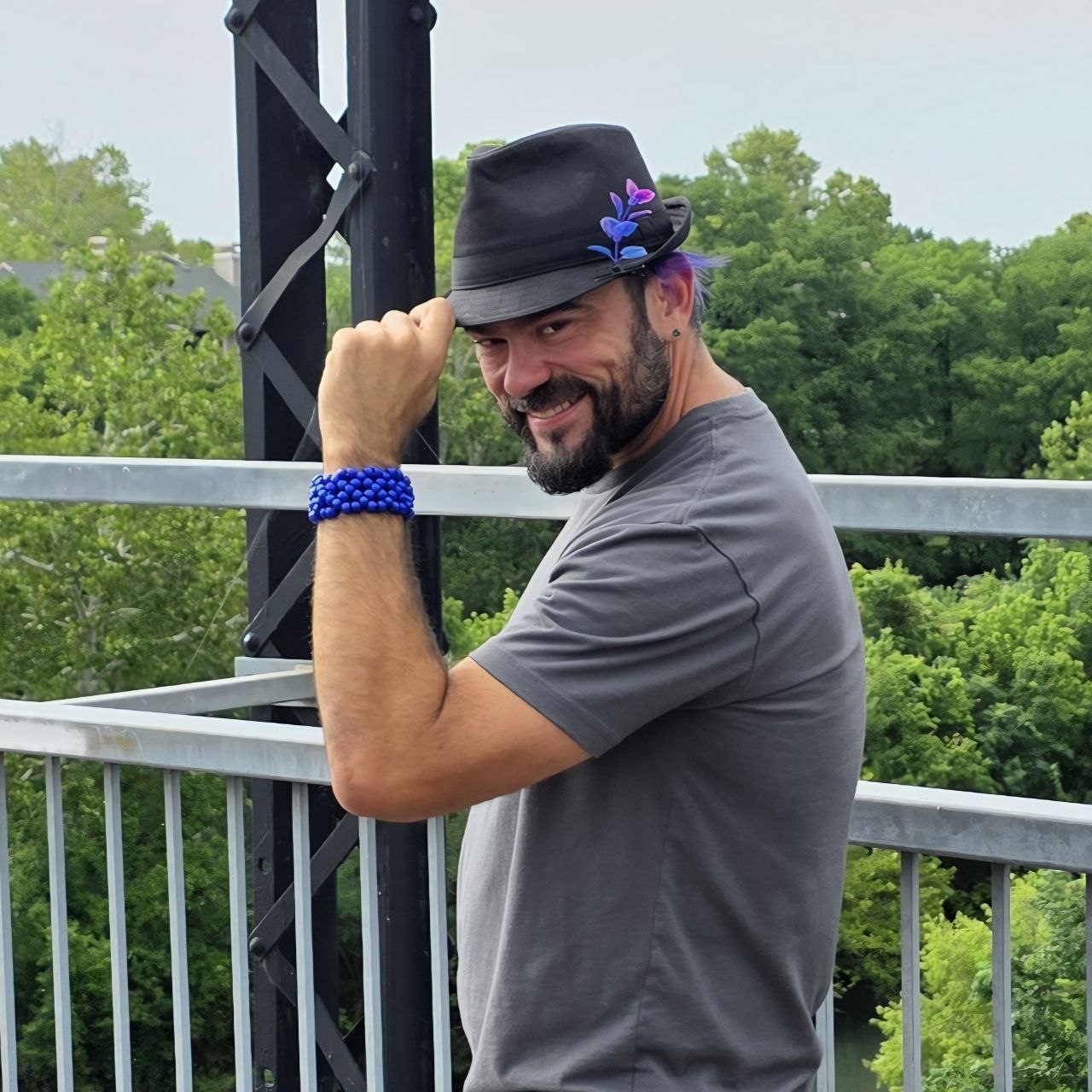
Thirty minutes, free, no pitch at the end. You tell me what’s going on and we find out together whether I’m the right person for it.
Opens my calendar in a new tab.
Or write to me first — these questions help me show up prepared.